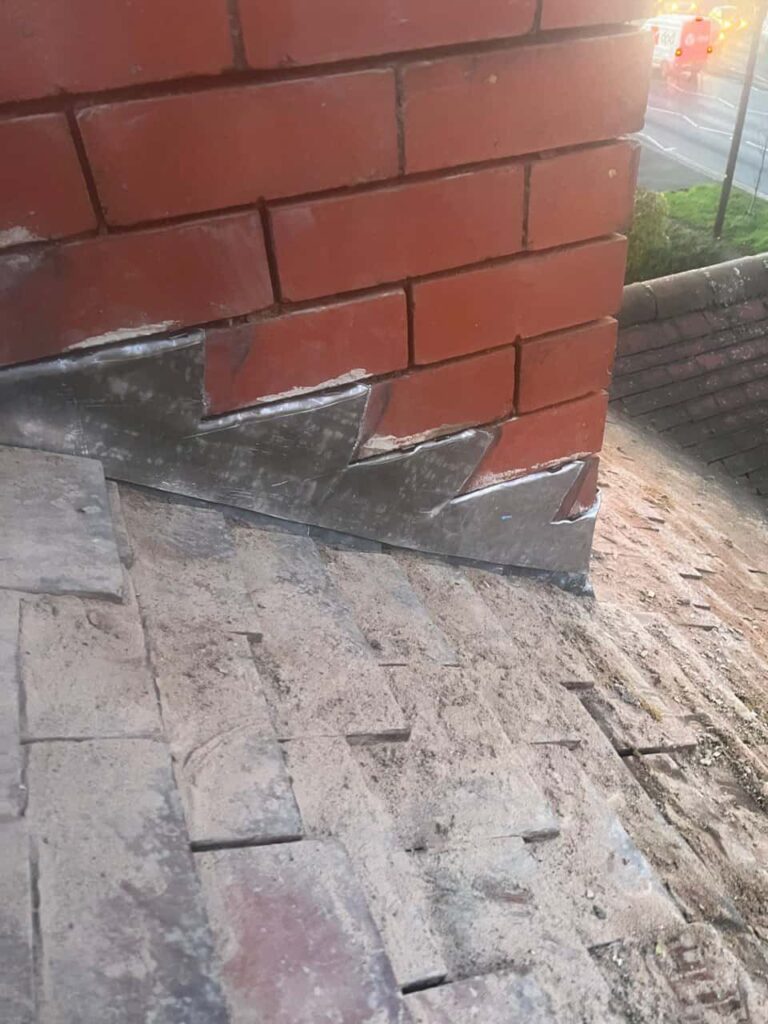
Finding pieces of roofing material on the ground can be an early warning that something above has deteriorated or become displaced. Even small fragments may reveal changes that are difficult to see from ground level.
For property owners in Knighton, Leicestershire, identifying the type of debris and arranging a timely roof inspection can help prevent a minor defect from developing into water ingress or wider deterioration.
What Different Types of Roof Debris May Indicate
Broken Tile or Slate Fragments
Pieces of tile or slate around a property may indicate cracking, surface deterioration or impact damage. A tile does not need to fall completely from the roof to become ineffective. A missing corner or concealed crack can expose the underlay and allow wind-driven rain beneath the covering.
Fragments should therefore be treated as evidence that the affected roof slope requires closer examination.
Crumbling Mortar
Small pieces of mortar may come from ridge tiles, hip tiles, verges or chimney details. Mortar can weaken gradually through weather exposure, moisture penetration and natural movement within the roof.
Deteriorated bedding may leave tiles less secure, even if they still appear correctly positioned. Loose ridge or hip tiles can then move further during strong winds, creating additional gaps in the roof covering.
Mineral Granules or Surface Flakes
Some roofing materials gradually shed surface particles as they weather. A small amount of natural wear may not indicate an immediate problem, but repeated or excessive shedding can suggest that the covering is becoming brittle or losing its protective surface.
This type of deterioration should be considered alongside the roof’s general condition. Cracking, fading and recurring leaks may indicate that the problem extends beyond one isolated section.
Metal Fixings or Clips
Roof tiles and slates may be secured with nails, clips and other concealed fixings. Finding corroded metal pieces near the property can indicate that these components have weakened.
Failed fixings can allow tiles to slip or lift without the tiles themselves being visibly broken. When several materials begin moving across the same roof slope, the battens and remaining fixings should also be assessed.
Pieces of Leadwork or Flashing
Thin pieces of metal may have come from flashing around a chimney, wall junction, roof valley or other vulnerable detail. Flashing directs water away from areas where different roof surfaces meet.
If it has split, lifted or become detached, moisture may enter beneath the surrounding materials. Because these defects can be difficult to identify from below, a professional inspection is usually needed to confirm the source.
Moss and Organic Material
Clumps of moss found in gutters or around the base of a property may have been washed or blown from the roof. Moss can retain moisture, obstruct drainage paths and grow between overlapping tiles.
Removing visible growth from ground level will not show whether the tiles beneath it have been lifted or damaged. The roof and rainwater channels may need to be checked for trapped material and restricted water flow.
Debris From Chimney Details
Fragments of brick, mortar or flaunching can sometimes originate from a chimney. These materials may indicate weathering around the brickwork, pointing or the surface supporting the chimney pots.
Chimney deterioration can also affect adjoining flashing and nearby tiles. This creates several possible routes for water to enter, making a full assessment more useful than treating one visible fragment in isolation.
Why the Location of the Debris Matters
Where debris is found may help identify its likely source. Material directly below a verge, chimney or roof valley can guide the inspection, although wind and rain may carry fragments away from the damaged area.
Useful details to note include:
- the type and approximate size of the material
- where it was discovered
- whether it appeared after strong winds or rainfall
- whether similar debris has been found before
- any accompanying damp marks, rattling sounds or visible gaps
These observations can help a roofer investigate the most relevant parts of the roof.
Why a Ground-Level Check Is Not Always Enough
A roof may look intact from the ground while concealing cracked tiles, weakened mortar or failed fixings. Debris can be the first visible sign that materials are no longer secure.
Avoid climbing onto the roof or attempting to reposition loose components. A professional roofer can inspect the affected area safely and assess the roof covering, fixings, battens, flashing and surrounding details.
Conclusion
Loose roof debris should not automatically be taken as evidence that the entire roof is failing. However, fragments of tiles, mortar, metal or chimney materials can indicate localised damage, ageing components or weakened fixings that require attention.
If you have found roofing debris around your property in Knighton, Leicestershire, contact Knighton Roofing Repairs to arrange an inspection. Our team can identify where the material has come from and recommend an appropriate repair based on the roof’s actual condition.
Call us on: 01547 315 099
Click here to find out more about Knighton Roofing Repairs
Click here to complete our contact form and see how we can help with your roofing needs.