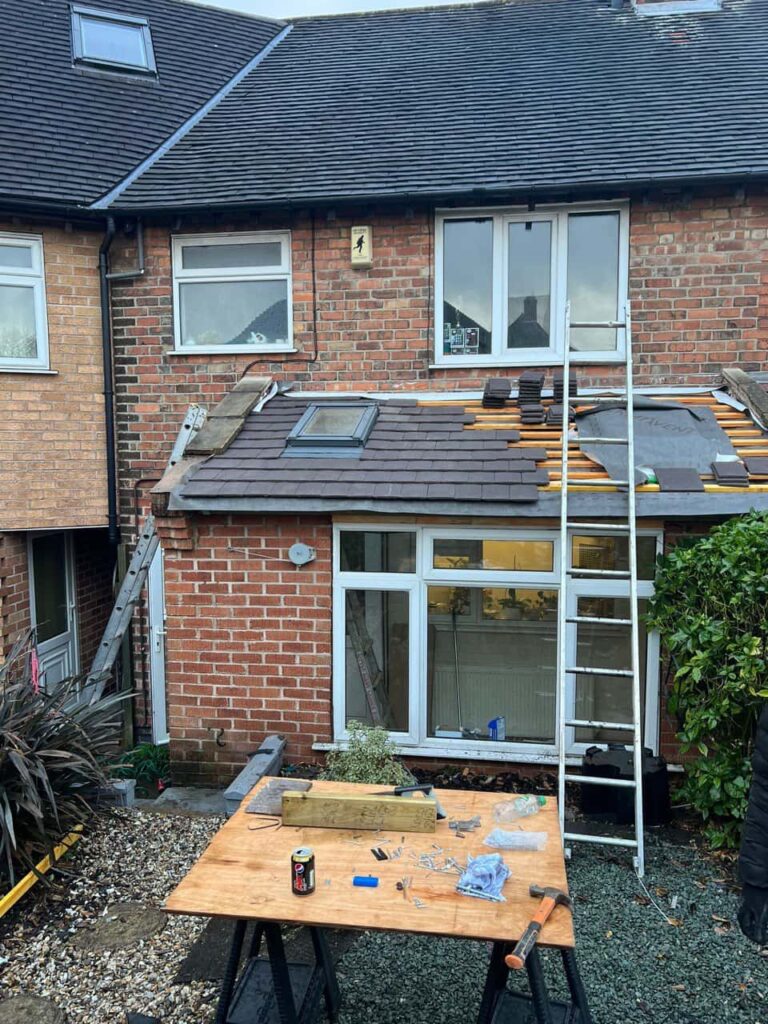
Strong winds are one of the most common causes of roof tile displacement in the UK, particularly in areas like Knighton where seasonal weather can be unpredictable. When tiles slip, even slightly, they can expose the underlying layers of the roof, allowing water to enter and causing further deterioration. Understanding how and why strong winds contribute to slipped tiles helps homeowners spot issues early and protect their property from avoidable damage.
Wind Uplift and Pressure Movement
When wind blows across a roof, it creates a pressure difference between the top surface and the underside of the tiles. Strong gusts can cause a lifting effect, known as wind uplift, that loosens tiles over time.
This uplift is especially problematic on older roofs or tiles that have weakened fixings. Once the bond is compromised, tiles are far more likely to shift or slip out of place.
Vulnerable Edges and Ridge Areas
The edges of a roof—including the eaves, ridges, and verges—are the areas most exposed to wind. These sections experience the greatest force as the wind hits the property.
Tiles in these positions often take the first impact, and if they move, the surrounding tiles can also begin to loosen. A single displaced tile can therefore create a chain reaction if not addressed quickly.
Weathering Weakens Tile Fixings
Over time, regular exposure to rain, frost, sunlight, and wind weakens both the tiles and their fixings. Mortar beds may crumble, nails can corrode, and adhesive bonds may deteriorate.
When strong winds strike, these weakened components are far less able to hold tiles securely. Even moderate gusts can be enough to dislodge tiles that are already vulnerable.
Repeated Movement Leads to Slippage
Some tiles do not slip in a single event. Instead, they shift gradually due to repetitive wind pressure.
Each time the wind hits the roof, the tiles move slightly. Over months or years, this repeated movement can displace tiles enough to create gaps, misalignment, or slipping into the gutter line.
Gaps Create Further Weakness
Once a tile moves even slightly, it creates a tiny gap beneath or around it. This makes it easier for future wind to get underneath the tile and lift it further.
As the gap grows, the tile becomes progressively more unstable, increasing the risk of complete displacement during future storms or strong winds.
Why Early Repair Matters
A slipped tile might seem minor, but it can expose the underlay beneath, allowing water to penetrate and cause internal damp, structural deterioration, and further tile movement.
Prompt repair ensures the roof remains secure and prevents more extensive damage, especially during periods of unsettled weather.
Conclusion
Strong winds contribute significantly to slipped roof tiles by weakening fixings, creating uplift pressure, and exploiting small gaps or vulnerabilities. Understanding these factors helps homeowners recognise the importance of early intervention and routine roof inspections.
If you have noticed slipped tiles or would like your roof checked after recent winds, Knighton Roofing Repairs in Knighton, Leicestershire is here to help. Contact us today to arrange a professional roof assessment from our experienced team.
Call us on: 01547 315 099
Click here to find out more about Knighton Roofing Repairs
Click here to complete our contact form and see how we can help with your roofing needs.